

Raw materials: Since June, sulfur and liquid ammonia prices have retreated after surging, while sulfuric acid kept climbing, forming solid cost support for TMAP. Sulfur price dipped slightly as some sellers cut offers, but later renewed geopolitical risks in the Middle East prompted holders to firm prices, keeping sulfur high and volatile. Restricted phosphate ore mining keeps ore prices tough. Liquid ammonia supply tightens amid coal cost support and summer facilities maintenance. Rising sulfuric acid further lifts production costs of wet-processed P.A. and the downstream TMAP.
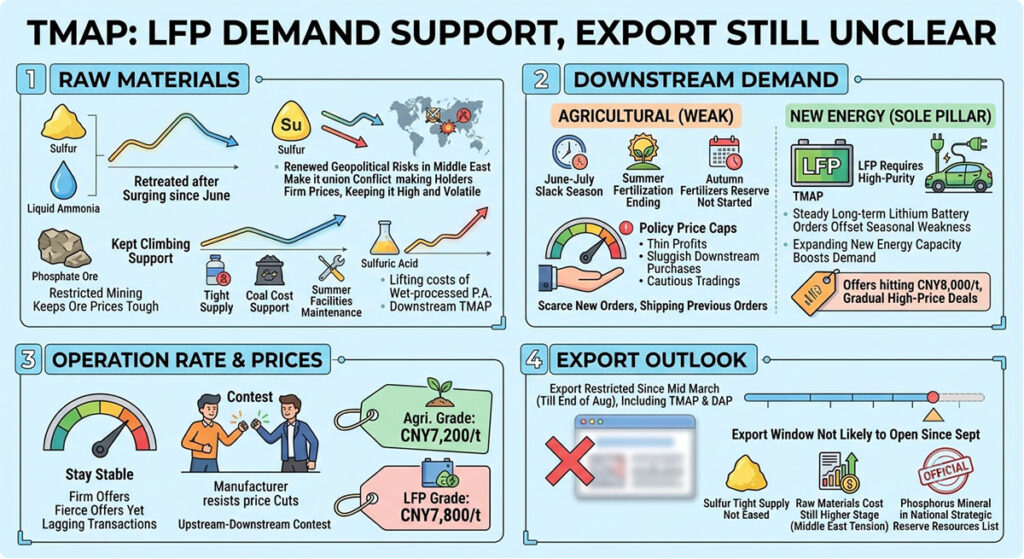
Downstream demand: June to July marks the slack season for phosphorus fertilizers, as summer fertilization is ending and autumn fertilizers reserve hasn’t started. Restricted by policy price caps, agricultural ammonium phosphate yields thin profits with sluggish downstream purchases and cautious tradings. New orders for TMAP are scarce, only shipments for previous orders are delivered.
New energy demand acts as the sole pillar. Lithium iron phosphate(LFP) requires high-purity TMAP. Steady long-term lithium battery orders offset seasonal weakness, and expanding new energy capacity boosts relevant demand, with offers hitting CNY8,000/t and gradual high-price deals.
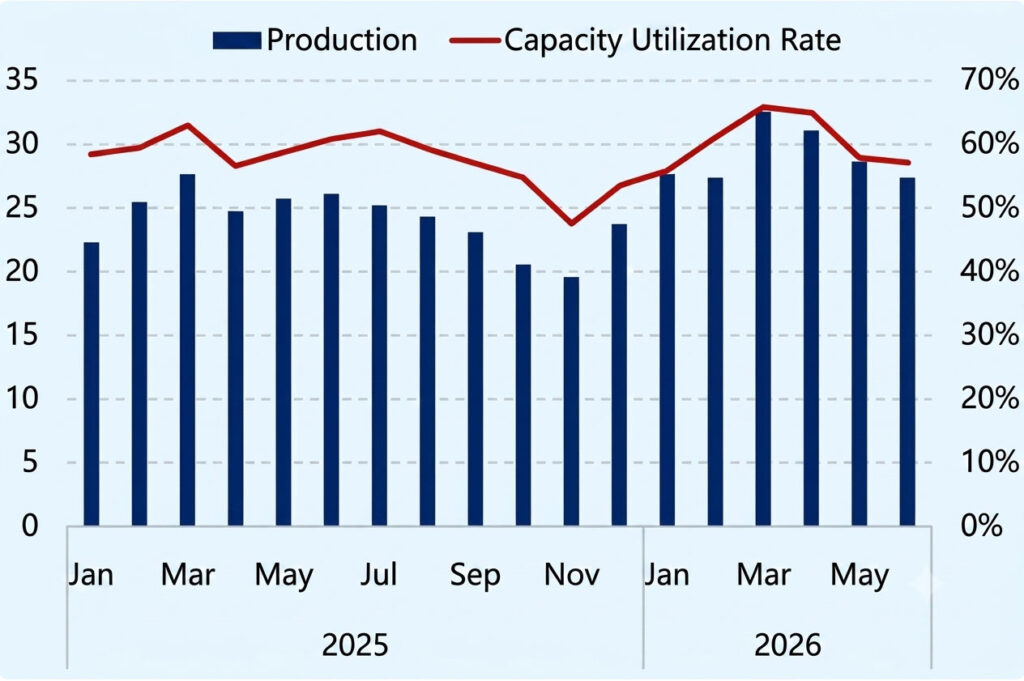
Operation rate: TMAP operation rate stay stable. Rising prices curb new bulk orders from new energy buyers, but manufacturers resist price cuts. The market sees firm offers yet lagging transactions with fierce upstream-downstream contest. TMAP price would stand at CNY7,200/t for agri. grade and CNY7,800/t for LFP grade.
Export: since Mid March, most fertilizers export is restricted, including TMAP and DAP. The restriction will last till end of Aug. But from the current situation, the export window is not likely to open since Sept. Cause sulfur tight supply is not eased and raw materials cost is still on the higher stage due to Middle East tension. While the phosphorus mineral is included in the National Strategic Reserve Resources list.


