
The sulfur market fell far faster and deeper than widely expected in October. Global demand remained sluggish, forcing suppliers to cut prices. Domestic market has a strong wait-and-see sentiment, while holders took a passive stance. Besides, downstream fertilizers operation rates keep sliding. The previous view that sulfur was prone to rise but hard to fall failed, and market sentiment turned bearish.
- Global demand weakening, imported sulfur facing pressure
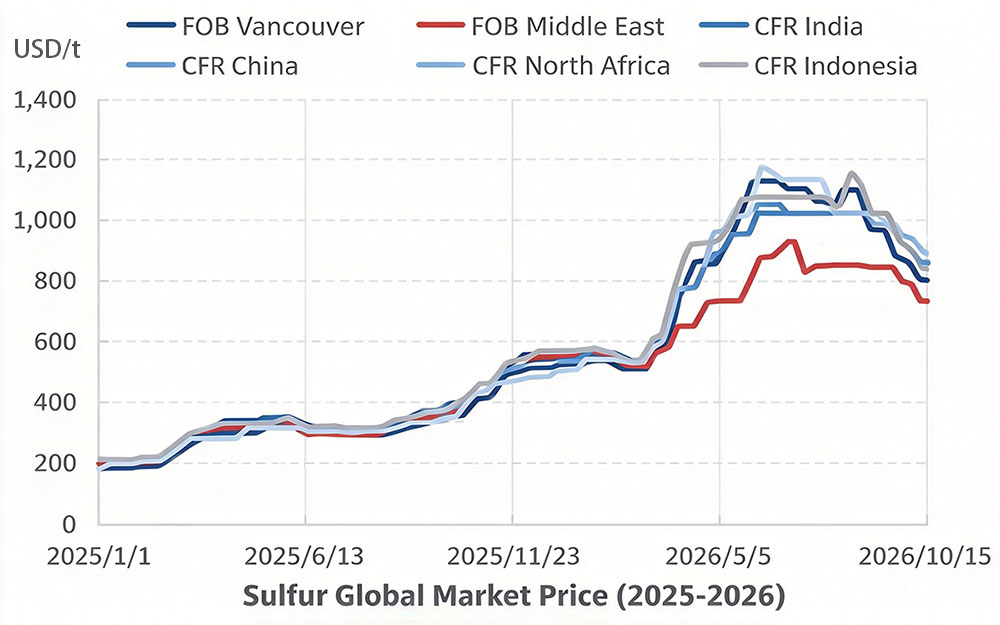
International sulfur USD quotations stay weak. Hit by weak demand, spot prices keep falling. Vessel cargo demand is muted, and suppliers accept lower bids to clear stocks, with Indonesian buyers trading at around CFR 850 USD/t. Fertilizer plants in North Africa, Brazil and China, plus nickel smelters in Indonesia, run at lower rates than last year. Negotiations for USD cargoes for China remain quiet, adding downward pressure on overseas prices.
- Downstream operation rates sliding, weakening demand support
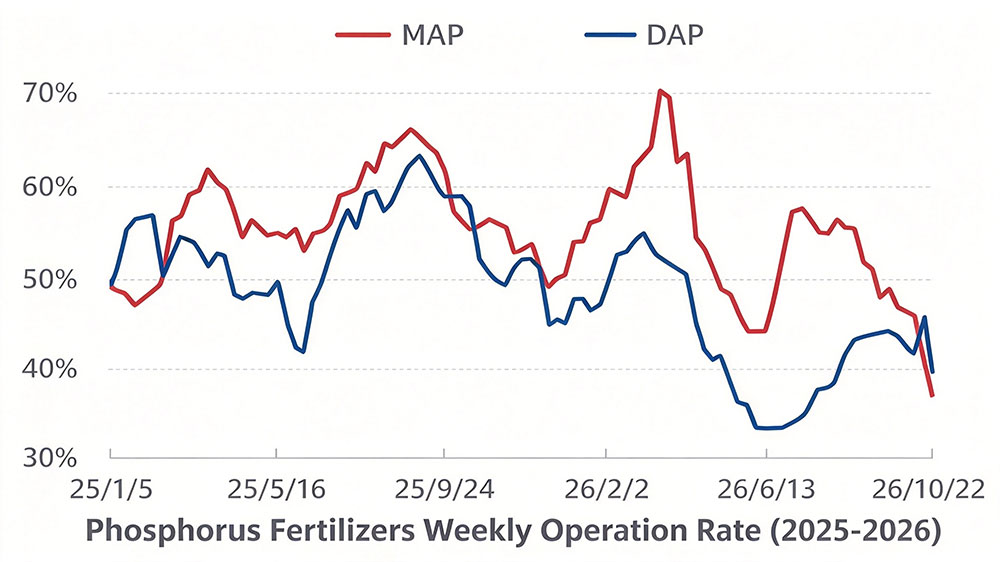
Domestic autumn fertilizer orders are nearly finished. Together with falling sulfur prices, bearish sentiment rises. New winter fertilizers reserves orders are slow, dragging down fertilizer operation rates. Current MAP capacity utilization is 37.50% (-9.37% MoM), DAP stands at 39.89% (-3.75% MoM). Lower operation rates of phosphate fertilizers reduce rigid sulfur demand and weaken fundamental support.
- Domestic trade sentiment leans bearish, trading activity at ports is sluggish.
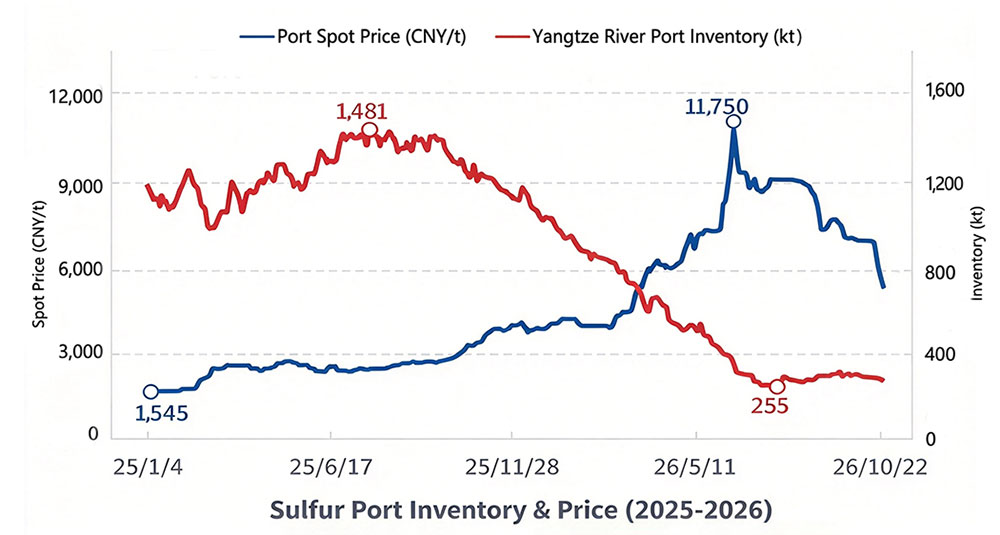
Domestic sulfur spot prices keep falling. Granular sulfur at Zhenjiang port is quoted at CNY5,550/t (-1550/t, -21.83% from end of Sept.). Initially, weak overseas markets encouraged buyers to test lower prices while sellers held firm. Later, domestic producers cut prices for destocking, which brought impact to port sulfur. Traders slowed purchases. Widespread caution and thin trading keep prices trending down.
Overall, sulfur market still has further downtrend. Domestic traders remain cautious and buying interest will stay limited in the short run. Coupled with low phosphate fertilizer operation rates and bearish factors persist, sulfur prices are expected to stay weak.